
Aeolus and Unfavourable Winds
Ships are still at the mercy of the Gods

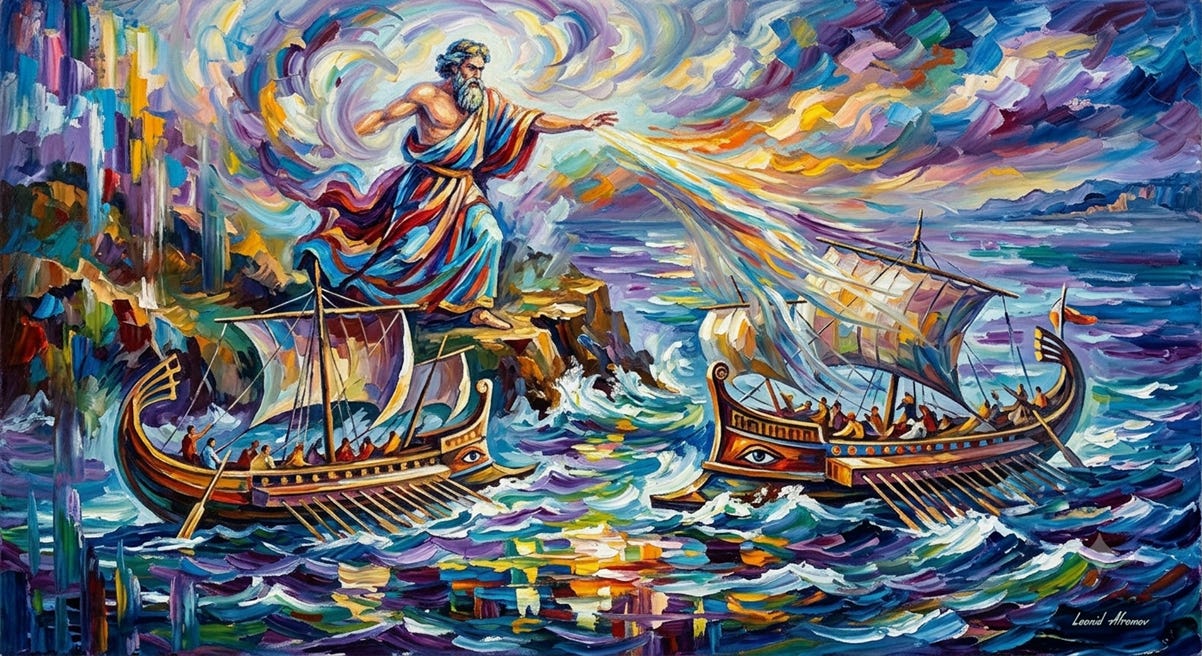
After his ordeals among the Cyclopes, Odysseus and his weary company came at last to the floating island of Aeolia, girded round with a wall of unbreakable bronze and rising sheer from the sea.
There dwelt Aeolus, son of Hippotas, whom the gods had appointed keeper of the winds—a man beloved of the immortals, living in ease with his wife and their twelve children, six sons wedded to six daughters, feasting together in halls forever fragrant with roasting meat and loud with music.
For a full month Aeolus received Odysseus as an honoured guest, asking to hear the whole tale of Troy and the long homeward road of the Achaeans. And when Odysseus at last begged leave to depart, Aeolus refused him nothing.
He took the flayed hide of a nine-year-old ox and into it he bound the blustering ways of every gale, for Zeus had made him steward of the winds, to still them or to rouse them as he pleased. This great bag he stowed within the hollow ship, lashed fast with a cord of gleaming silver so that not the faintest breath might escape. And out of them all he loosed only the West Wind, gentle and steady, to carry the ships home to Ithaca.
Nine days and nine nights they sailed, and the fleet ran sweetly before that fair breeze. On the tenth day the shores of home rose at last upon the horizon—so near that the men could see the watchfires burning and figures moving upon the headlands. Then, worn out with holding the sheet unsleeping in his own hands, Odysseus let a soft slumber overtake him.
And this was his undoing. For the crew, muttering among themselves, fell to envy. They supposed the bag to be heavy with gold and silver, some secret treasure that Aeolus had lavished upon their captain while they came away empty-handed.
“See how he is loved and honoured wherever he goes,” they grumbled, “and we who shared every hardship go home with nothing.”
So, in their folly, they unbound the shining cord.
At once every wind burst howling from the hide. A shrieking tempest seized the ships and swept them, weeping, back across the deep and away from their native land.
Odysseus woke to ruin. For a moment he wondered whether to fling himself into the sea and be done with it, but he endured, wrapping his face and lying still while the storm drove them all the way back to the island of Aeolus.
There Odysseus came again as a suppliant, and told the king honestly how sleep and the recklessness of his men had wrecked the gift. But Aeolus drove him from the door in horror, crying that he might not help or send onward a man so plainly hated by the blessed gods.
And so, cast out and heartsick, Odysseus put to sea once more—his homecoming, which had lain within arm’s reach, now snatched away, and the long wandering set to begin again.
Rosy fingered Dawn caressed the waters of the Dardanelles and it seemed plain calm sailing ahead.
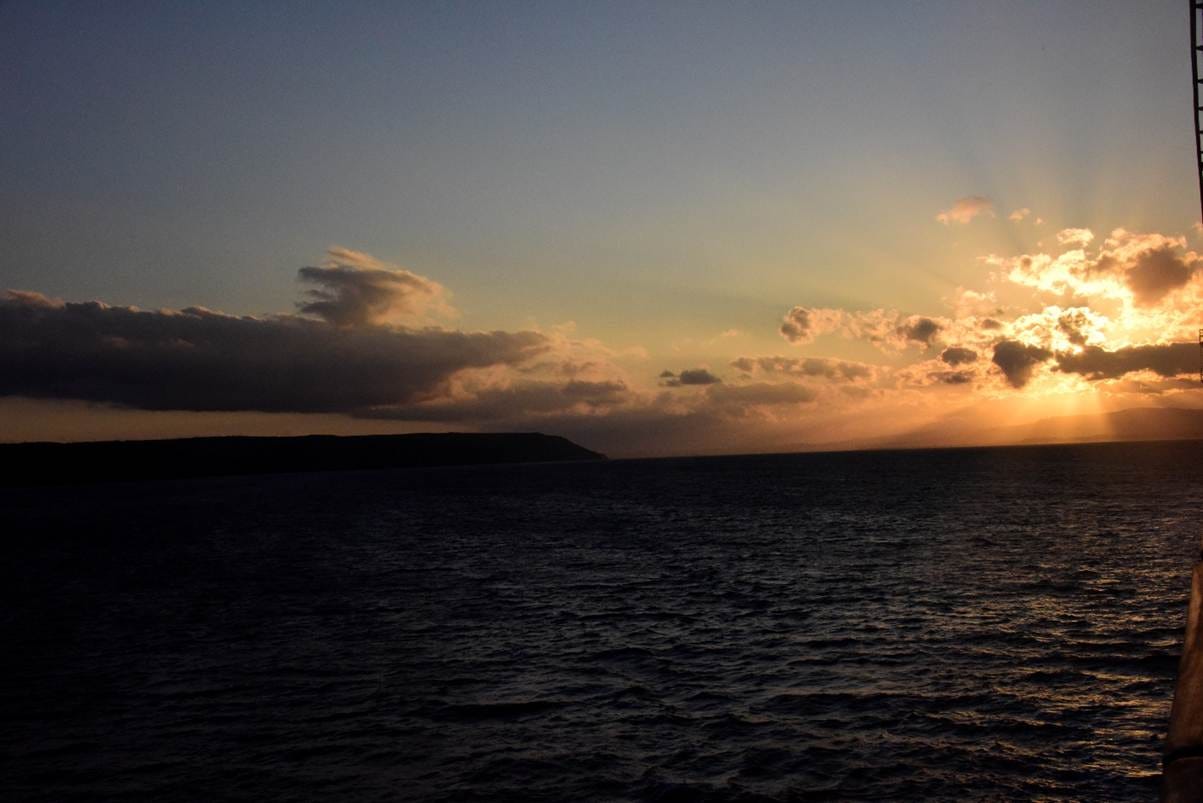
But Aeolus’ winds swept down from the Black Sea, through the narrow passage of the Dardanelles and burst into the Aegean. So strong were they that our ship was unable to put in to Cannakale from whence we had a tour to the archaeological site of Troy.
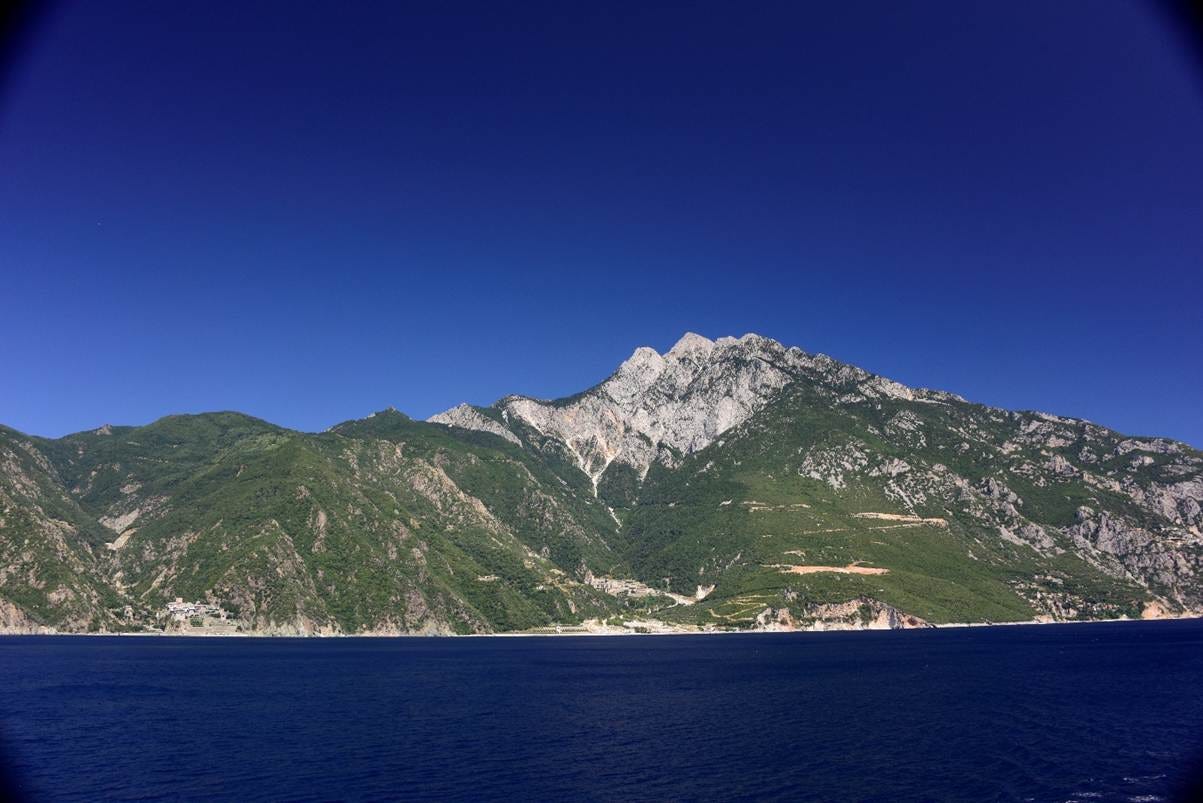
And so we were cast upon the face of the waters for a day. Our Captain took us to Mount Athos, a stunning location, but we could not go ashore. Men only in that holy place self-governed by the Church and the Monasteries on the Mountain.
The winds came and went but not entirely. In a couple of locations we could not berth at a wharf and had to anchor off-shore or, depending on the depth of the sea near the port remain on engine power using GPS to remain in position. A remarkable process and one could see the churn of the water astern as the engines made their adjustments.
This method of “anchoring” or positioning was used when we came to Thera or, as it was named by the Italians, Santorini.
But the winds were so unfavourable and so strong that we were unable to put in to Mykonos which was an important destination because from Mykonos one could take a ferry to sacred Delos, birthplace of Apollo and Artemis and a wonderful archaeological site.
So the winds of Aeolus prevented a stop at Mykonos and one can only hazard a guess at the sea state. It is unlikely that any ferries would have been running.
I have already been to Delos. I looked forward to a second visit. But perhaps it is all for the best that Aeolus blew the way he did. Perhaps the wonder and the magic of that first visit would not be repeated. But I still have the extraordinary experience of roaming the fascinating archaeological site of Delos, strolling down the Avenue of Lions – all now rather worn after millenia of weather – and stopping for a break by the edge of the bay where we landed looking out to a headland, drinking ice cold water and imagining that in just a moment, a flash in the sun, some spray on the rocks, Odysseus would come into view. At least that memory of Delos is with me and I hope will never leave for it is indeed a wondrous place - mystical, magical,fantasmical.
But there was an alternative stop proposed at Nafplion with an excursion to Mycenae, Agammemnon’s capital.
But that visit must wait for another time.
And still the morals of that story ring with an enormous calamity.
Wow! It seems that even European law supports Mount Athos being men only - could that be right?