
Good and Evil
Gaming Reflections

Over the Christmas break I had a reasonably serious problem with my computer. It had been demonstrating problems in loading file directories. It was running rather slowly. Then it seemed to give up the ghost altogether.
This was a problem which provided an opportunity. A new C:\ drive with Windows 11 on it would be an advantage but much of the data on that drive would be lost – well not quite lost. The old drive still functioned intermittently and some of the data could be transferred.
Luckily most of my data, programs and documents were either in the Cloud (I use OneDrive and have accounts with Dropbox and Mega) or on other drives which were connected to the new system.
Thanks to some expert advice from the tech support people at PB Tech Glenfield we decided to rebuild the machine to the extent that with a new motherboard and processor plus an updated video card I ended up with pretty much a new machine.
And it runs really well. Admittedly a considerable amount of time has been spent reconfiguring and reinstalling programs but things are running well.
One computer based hobby that I have had since I started with computers is computer gaming and things have improved in leaps and bounds from “Space Invaders” and clunky graphics to modern very large and resource hungry productions that cost more than some movies.
Recent industry reports show that global video game revenues (~US $224–249 billion in 2024) are larger than the combined revenues of the global film industry and music industry.
One analysis estimated the gaming market at around $184 billion, compared to film at ~$34 billion and music at ~$29 billion — meaning gaming alone dwarfs movies by a significant margin.
PwC’s 2025 entertainment outlook forecasts video game industry revenues continuing to grow faster than traditional cinema box office revenues.
Gaming’s economic expansion reflects several structural and consumer trends:
Digital distribution and microtransactions (in-game purchases, subscription models, and downloadable content) create ongoing revenue long after release.
Mobile gaming alone now accounts for a large share of global gaming revenue, expanding the market beyond traditional console/PC gamers.
Streaming and E-sports communities (e.g., Twitch, YouTube gaming) generate engagement and indirect revenues beyond conventional sales.
While video game industry revenues are larger, some analysts caution about direct comparisons.
The movie industry’s total value includes theatrical, streaming, pay-TV rights, and other distribution windows — revenue streams that are harder to compile comprehensively.
Some estimates suggest that when all film industry revenue (including global rights and streaming) is counted, the gap narrows — but the overall trend still shows gaming as a dominant global entertainment sector.
By audience engagement and global footprint, gaming often rivals or surpasses traditional cinema — with billions of active players worldwide and extensive cultural reach.
Some of the highest-grossing entertainment products ever (e.g., Grand Theft Auto V) generated blockbuster-scale revenues on launch that rival or exceed major Hollywood film box office records.
Economically and in scale, the video game industry has grown to be larger — in total revenue and consumer engagement — than the movie industry alone, and often exceeds the combined revenues of multiple entertainment sectors.
Critics may note differences in how revenues are counted (e.g., full lifecycle of films, licensing, etc.), but the dominant trend is clear: gaming has become the largest segment of global entertainment production.
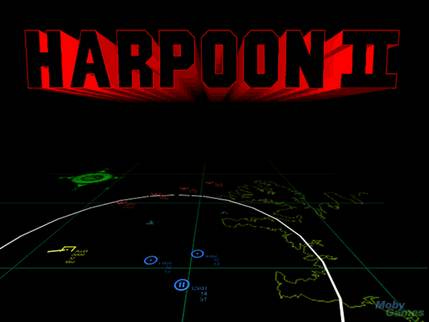
There are a number of different gaming genres but for me I enjoy strategy games such as the Europa Universalis series and Sid Meiers Civilization series along with military strategy games – mainly with a naval flavour. I started back in the pre-windows days with a games called Harpoon 2 (1994) which I have adapted so it runs on Windows 11 and I still enjoy it.
A successor to that game is one called Command – Modern Operations which is a complex game and one which could be used for military training purposes.
One gaming genre which was bound to attract my attention occupied Tolkien’s “Lord of the Rings” world.
There have been a large number of LOTR games published and several of them capitalized on the Peter Jackson movie trilogy. These were games published under the EA label and were clearly licensed by the Zaentz corporation. Voices in the games are provided by Ian McKellen, Christopher Lee and other LOTR cast members and the series has been marketed under the title Battle for Middle-earth.
There are three major titles in the series. Battle for Middle-earth (2004), Battle for Middle-earth II (2006) and Battle for Middle-earth: Rise of the Witch King (2006).
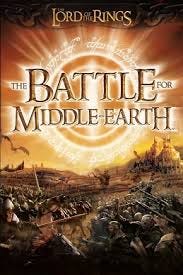
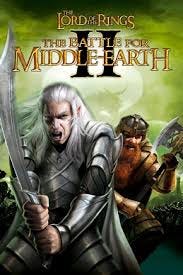
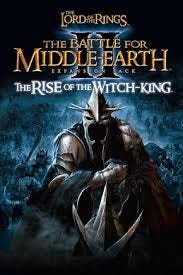
So here we are twenty years later interested in revisiting these games. Getting games designed for a 20 year old operating system on a modern OS is not easy but I still had the original discs and install requirements. But the games did not operate perfectly and a bit of detective work led me to a special launcher developed by some of the good people at the Battle for Middle-earth Foundation.
This project was created with one goal: to help finally unite and bring together the BFME gaming community, with high quality tools and libraries, as well as brand new platforms for multiplayer as well as modifications.
The launcher was a great utility and allowed me to install all three programs and update and apply new patches. And they all run perfectly on Windows 11.
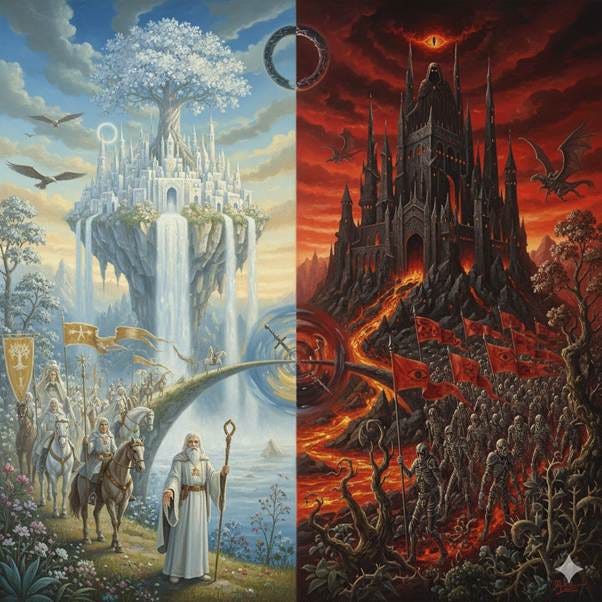
And so I started with plain vanilla Battle for Middle-earth and a user is given an opportunity to select a particular campaign and to play as “Good” or “Evil”. I had never noticed this before although it had always been there. Instinctively I have played “Good” and fulfilled the role of the Fellowship characters. After all, who would want to play as Evil? Who would want to play as Sauron?
But as Elrond said “For nothing is evil in the beginning. Even Sauron was not so.”
This statement highlights several key themes regarding the nature of good and evil.
It suggests that all beings and creations were originally created good, and evil is a later corruption, perversion, or absence of that good. Even the Dark Lord Sauron, known for his malice and desire to dominate, did not start as inherently evil.
Tolkien noted that while the One Ring was inherently evil from its conception (as it was forged to dominate), the spirit that made it (Sauron) was not originally so And this view is often linked to the Augustinian perspective, which holds that evil is not a substance created by God, but rather a “lacking” or “moving away” from good.
Galadriel echoes a similar sentiment in the Rings of Power TV series – “”Nothing is evil in the beginning... We thought our light would never dim”.
And this caused me to reflect about how Tolkien addressed the themes of good and evil. And the reverie was considerable.
For Nothing is Evil in the Beginning: The Fall of the Valar in Tolkien’s Legendarium
In the line “For nothing is evil in the beginning” Elrond was referring specifically to Saruman’s corruption. Yet this observation resonates far beyond one fallen wizard—it articulates a fundamental principle of Tolkien’s entire cosmology.
Throughout his writings, particularly in The Silmarillion and The History of Middle-earth, Tolkien explores how beings of great nobility and purpose can descend into evil through pride, possessiveness, and the desire to dominate. The falls of Melkor (later called Morgoth) and Sauron provide the most comprehensive illustrations of this tragic pattern, demonstrating that evil in Tolkien’s universe is not an independent force but a corruption of good.
The Nature of Evil in Tolkien’s Cosmology
Before examining specific falls, we must understand Tolkien’s conception of evil itself. As a devout Catholic, Tolkien drew heavily on Augustinian theology, which holds that evil has no independent existence but is rather a privation or corruption of good—a “parasite” that can only exist by twisting what was originally created good.
In Tolkien’s legendarium, this principle manifests in the inability of evil to create anything genuinely new. As Frodo observes in The Return of the King, the Dark Lord “can only mock, he cannot make: not real new things of his own.”
This theological foundation means that all evil in Middle-earth must necessarily have begun as something good, or at least neutral, that became corrupted.
In Morgoth’s Ring (volume ten of The History of Middle-earth), Tolkien developed this idea further through his concept of the “Morgoth-element.” He explained that Morgoth, the first and mightiest of the Ainur, expended so much of his original power in attempting to dominate and control Arda (the Earth) that he literally disseminated his essence throughout the fabric of the world itself.
This means that all matter in Middle-earth contains traces of his corruption, making the world itself a “Morgoth-Ring”—an object that, like the One Ring, contains the invested power of a dark lord. This concept reinforces that evil is not separate from creation but a perversion of it.
Melkor: The Discord in the Music
Melkor’s fall represents the archetypal corruption in Tolkien’s mythology, and it begins, significantly, in “the beginning” itself. In the Ainulindalë, the creation myth presented in The Silmarillion, Melkor is introduced as “the greatest of the Ainur” who possessed “a part in all the gifts of his brethren.” Ilúvatar, the supreme creator, gave Melkor especially great gifts, including power and knowledge. Crucially, Tolkien emphasizes that Melkor was not created evil—rather, he became evil through his own choices.
The seeds of Melkor’s corruption appear even before the creation of Arda. During the Great Music of the Ainur, in which the angelic beings sang the world into existence according to the themes given by Ilúvatar, Melkor began to introduce his own themes.
Tolkien writes that Melkor “had gone often alone into the void places seeking the Imperishable Flame” (the creative power of Ilúvatar himself). This seeking seems, at first, almost admirable—a desire for knowledge and creative power. But the crucial turn comes when Melkor begins to have “thoughts of his own unlike those of his brethren.”
The key phrase here is “of his own.” Melkor’s desire evolves from seeking to understand creation to wanting to be a creator independent of Ilúvatar. As Tolkien explains in the Ainulindalë, Melkor “had desired to bring into Being things of his own,” but “the Flame Imperishable was with Ilúvatar” and could not be found in the Void. Unable to create independently, Melkor instead “began to interweave matters of his own imagining that were not in accord with the theme of Ilúvatar.” This is the fundamental pattern of Tolkien’s conception of evil: the inability to create leads to the attempt to dominate and corrupt what exists.
In various drafts explored in The History of Middle-earth, Tolkien wrestled with the question of Melkor’s motivation. In some versions, Melkor’s desire stems from loneliness in the Void and a wish to create companions. In others, it’s more clearly rooted in pride and the desire for worship. What remains consistent is that Melkor’s original gifts and his original desires were not inherently evil. His power, his creativity, his desire for beauty and order—all of these were good. What corrupted them was the turn inward, the desire to make these things “his own” rather than part of the harmonious whole ordained by Ilúvatar.
The Descent of Melkor into Morgoth
The progression of Melkor’s fall continues throughout the chronicles of the Elder Days. When the Valar (the Ainur who entered Arda to shape it) begin their work, Melkor repeatedly undermines their efforts.
Yet even here, Tolkien suggests that Melkor’s actions begin with something that might have been good. In the Quenta Silmarillion, we learn that Melkor claimed he wished to prevent Arda from remaining “a void or waste,” and that he wanted to give it order and structure. The problem is that it must be his order, his structure.
Tolkien depicts Melkor’s corruption as progressive, not instantaneous. In the early versions found in The Book of Lost Tales (volumes one and two of The History of Middle-earth), Melkor is portrayed somewhat differently than in the published Silmarillion—sometimes almost as a tragic figure driven by jealousy and frustration.
As Tolkien revised the mythology, Melkor became darker, but the progression remained. He begins by disrupting the labours of the other Valar, then by claiming dominion over parts of Arda, then by creating (or rather, corrupting) servants like the Balrogs and eventually breeding the Orcs from captured Elves.
A particularly significant moment comes when Melkor assumes the name Morgoth, “the Black Foe of the World,” given to him by Fëanor after the theft of the Silmarils and the murder of Finwë.
This renaming represents the completion of his transformation. He is no longer simply Melkor, the mighty Vala whose power was misdirected, but Morgoth, whose very identity is defined by opposition and destruction.
The name change signifies that he has become so corrupted that his original nature is essentially gone—he is now the thing he made himself into through his choices.
In Morgoth’s Ring, Tolkien explores an important consequence of Morgoth’s methodology. Because Morgoth could not create independently, he had to pour his own power into corrupting what existed. This means that as he extended his dominion, he actually diminished himself.
The Orcs, trolls, dragons, and other servants of Morgoth all contained portions of his own invested power. By the end of the First Age, Morgoth had become significantly less powerful than he was at the beginning, because he had spent his native power attempting to control and dominate. This is another example of the self-destructive nature of evil in Tolkien’s mythology—the attempt to possess everything ultimately leads to possessing nothing, not even oneself.
Sauron: The Corruption of Order
If Melkor/Morgoth represents the archetype of corruption through pride and the desire for independent creation, Sauron represents corruption through the desire for order and efficiency. Sauron’s fall is in some ways more subtle and, for that reason, perhaps more relevant to human experience.
In The Silmarillion, we learn that Sauron was originally a Maia (a lesser Ainu) of Aulë the Smith, the Vala who was concerned with crafts, substances, and the material structure of the world. Tolkien writes that Sauron “was in the beginning of Aulë,” and in the early days he was called Mairon, meaning “the admirable.”
This is crucial: Sauron began not as a spirit of destruction but as one devoted to craft, order, and making. His association with Aulë suggests an originally constructive purpose—the shaping and ordering of matter into beautiful and useful forms.
In an important letter (Letter 153 in The Letters of J.R.R. Tolkien), Tolkien provides crucial insight into Sauron’s fall:
“Sauron desired to be a God-King, and was held to be this by his servants; if he had been victorious he would have demanded divine honour from all rational creatures and absolute temporal power over the whole world.”
But significantly, Tolkien adds that
“Sauron had never reached this stage of nihilistic madness. He did not object to the existence of the world, so long as he could do what he liked with it.”
This distinction is vital. While Morgoth, in his final form, “sought the annihilation of all existence but himself,” Sauron wanted to dominate and order existence.
In The Peoples of Middle-earth (volume twelve of The History of Middle-earth), Tolkien elaborates that Sauron’s desire began as a genuine wish to improve the world, to make it more orderly and efficient. However, he wanted to achieve this through absolute control, believing that his superior knowledge entitled him to rule over lesser beings for their own good.
The seduction of Sauron by Melkor likely occurred through this very desire. Melkor, being extraordinarily cunning, would have approached Sauron not through promises of destruction but through promises of greater power to achieve order.
Tolkien suggests in various writings that Sauron was not initially evil-intentioned when he joined Melkor—he believed that through Melkor’s greater power, a more perfect order could be achieved than the Valar were capable of creating. This is the classic pattern of the corruption of good intentions: the belief that noble ends justify tyrannical means.
The Progression of Sauron’s Corruption
Sauron’s descent into evil accelerates through several key stages across Tolkien’s writings. After the fall of Morgoth at the end of the First Age, as recounted in The Silmarillion, Sauron initially repented. He appeared before Eönwë, the herald of Manwë, and showed contrition.
However, when Eönwë told him he must return to Valinor to face judgment from the Valar themselves, Sauron’s pride prevented him. He could not face the humiliation of submitting to those he considered his peers (or even inferiors, given his now-vast experience and power accumulated under Morgoth).
This moment represents a crucial turning point. Sauron’s reluctance to submit to judgment might have begun as simple pride or shame, but by refusing to return to Valinor, he chose to remain in Middle-earth where he could continue his projects of ordering and dominating.
Tolkien writes in The Silmarillion that Sauron “fell back into evil, for the bonds that Morgoth had laid upon him were very strong.” This passage suggests both that Sauron’s corruption was not yet complete even after serving Morgoth for an entire Age, and that the patterns of thought and action established under Morgoth had created a kind of psychological bondage that made true repentance extremely difficult.
During the Second Age, Sauron’s character undergoes what Tolkien describes in his essays (found in Morgoth’s Ring) as a critical transformation. He begins this age still capable of taking fair form and still able, perhaps, to deceive even himself about his intentions. His seduction of the Númenóreans and his crafting of the Rings of Power show Sauron at his most sophisticated and dangerous—not as a figure of obvious evil, but as a teacher, counselor, and bearer of gifts.
The creation of the Rings of Power is particularly significant for understanding Sauron’s corrupted nature. The Rings were not simply tools of domination—they were genuinely powerful objects that could preserve and protect. The Three Rings of the Elves, which Sauron never touched, were capable of great good. Even the Nine and the Seven had real benefits for their bearers before becoming instruments of slavery. This reflects Tolkien’s principle that Sauron, like all evil beings, could not create anything entirely new or entirely evil. He could only corrupt and redirect what was already there.
The forging of the One Ring in the fires of Mount Doom represents Sauron’s ultimate commitment to the path of domination. In creating the One Ring, Sauron poured much of his own native power into it, following the same self-diminishing pattern as Morgoth. As Gandalf explains in The Lord of the Rings, Sauron “let a great part of his own former power pass into it, so that he could rule all the others.”
This was simultaneously the height of Sauron’s power (when wearing the Ring, he was nearly invincible) and the beginning of his greatest vulnerability (without the Ring, he was greatly diminished, and with its destruction, he would be reduced to impotence).
The Númenórean Catastrophe and Sauron’s Final Transformation
Sauron’s capture by the Númenóreans and his subsequent corruption of their kingdom represents one of the most sophisticated depictions of evil in Tolkien’s work. In Akallabêth (part of The Silmarillion), we see Sauron achieve through apparent defeat what he could not achieve through force. Brought as a prisoner to Númenor, he became a counsellor to Ar-Pharazôn and eventually the power behind the throne, convincing the Númenóreans to worship Morgoth and ultimately to assault Valinor itself.
What’s remarkable here is that Sauron achieved this through corrupting what was already present: the Númenóreans’ pride in their achievements, their fear of death, their desire for permanence and power. He did not introduce entirely new ideas but rather encouraged and amplified tendencies that were already there.
This subtlety—working with the grain of existing flaws rather than imposing wholly foreign concepts—demonstrates both Sauron’s sophistication and Tolkien’s understanding that corruption works through exploiting existing vulnerabilities.
However, the destruction of Númenor, while a victory for Sauron’s purposes, marked his final transformation into a purely evil being. In the cataclysm that drowned Númenor, Sauron’s physical body was destroyed. As Tolkien explains in The Silmarillion and elaborates in his letters, when Sauron returned to Middle-earth, he could no longer assume a fair form. The text states:
“he was diminished, for he could no longer assume a form that seemed fair to mortal eyes.”
This loss was permanent. Sauron could still take shape, but only as a figure of terror.
This transformation is deeply significant. It represents the completion of Sauron’s corruption—he can no longer even appear good, because he has become so thoroughly identified with evil that it shapes his very being.
The metaphysical principle here is that one becomes what one does; persistent choices in a particular direction eventually transform one’s nature. Sauron chose domination and control so consistently and thoroughly that he became incapable of being anything else.
The Shared Pattern: Pride, Possessiveness, and Domination
When we examine the falls of Morgoth and Sauron together, a clear pattern emerges that illuminates Tolkien’s statement that “nothing is evil in the beginning.” Both beings began with genuine gifts and potentially good desires. Melkor wanted to create beauty and order; Sauron wanted to improve and organize the world. Both possessed great power and knowledge that could have been used for tremendous good.
The common factor in their corruption is what Tolkien, in his letters and essays, repeatedly identifies as the fundamental sin in his mythology: the desire to dominate other wills.
This desire has several stages. First comes the belief in one’s own superior knowledge or right to rule. For Melkor, this was the belief that his greater power entitled him to shape Arda according to his own vision. For Sauron, it was the belief that his superior understanding of order and craft meant he should organize all of Middle-earth.
Second comes the refusal to submit to or harmonize with a higher authority or peer wills. Melkor would not submit his themes to Ilúvatar’s design; Sauron would not submit to the judgment of the Valar. This refusal is rooted in pride—the inability to accept one’s place in a larger order.
Third comes the attempt to force others to serve one’s vision. Unable to create independently, both Melkor and Sauron turn to corrupting and controlling what already exists. Melkor corrupts Elves into Orcs, Maiar into Balrogs, and the very matter of Arda itself. Sauron corrupts the Rings of Power, the Númenóreans, and eventually even former Maiar like Saruman.
Finally comes the progressive self-diminishment that results from this corruption. Both Morgoth and Sauron pour their native power into their attempts at domination, becoming increasingly dependent on external instruments of control and increasingly vulnerable to loss. Morgoth becomes bound to matter itself, losing his freedom; Sauron becomes bound to the Ring, creating the condition for his ultimate defeat.
The Applicability to the Human Condition
Tolkien’s depiction of the falls of Morgoth and Sauron resonates because it reflects observable patterns in human moral corruption. Great evils rarely begin with someone consciously choosing wickedness; they begin with someone choosing their own will over others’, their own vision over shared truth, their own power over mutual service.
In “On Fairy-Stories” and various letters, Tolkien discussed his belief that fantasy should be applicable rather than allegorical. The falls of the great spirits in his mythology are not allegories for specific historical events or persons, but they illuminate general truths about how corruption works. The progression from legitimate desire to domination, from service to self-service, from humility to pride—this pattern repeats throughout human history at every scale, from personal relationships to political movements.
Consider how Sauron’s desire for order mirrors the logic of every tyranny: things would work better if only everyone would submit to the rule of those who know best.
Or how Morgoth’s desire to create “things of his own” reflects the human tendency toward possessiveness, toward wanting to make our mark independent of others rather than contributing to a common good. These are recognizable temptations precisely because they begin from something defensible or even admirable.
Tolkien’s genius lies in showing that the truly dangerous corruptions are not those that appear obviously evil but those that appear reasonable, beneficial, even noble. Sauron as Annatar, the “Lord of Gifts,” teaching the Elven-smiths how to preserve the beauty of their realms, appears far more seductive and dangerous than Sauron as the Dark Lord of Mordor.
Similarly, Saruman’s corruption begins not with a desire for destruction but with a desire for knowledge and power to resist Sauron—only gradually does he come to believe that matching Sauron’s methods is justified by the importance of the struggle.
The Tragedy of Corruption
The statement that “nothing is evil in the beginning” is both a theological proposition about the nature of evil and a psychological insight into how corruption works. Throughout The Silmarillion, The History of Middle-earth, and The Lord of the Rings, Tolkien demonstrates this principle through the tragic falls of beings who began with greatness and potential for tremendous good.
Melkor and Sauron were not created as devils but became devils through their choices—specifically, through choosing their own will over harmony with others, their own dominion over free cooperation, their own glory over shared achievement. At each stage of their descent, they might have turned back, might have chosen differently. Indeed, Sauron nearly does turn back after Morgoth’s fall, but pride prevents his return to face judgment.
This makes their falls genuinely tragic rather than simply evil. Tragedy requires the fall of someone who had potential for greatness; it requires that we see what was lost, what might have been. When we understand that Melkor was the mightiest of all the Ainur, gifted above all others, we understand the magnitude of what his corruption destroyed—not just the damage he did to others, but the good he might have accomplished. When we recognize that Sauron was once Mairon the admirable, devoted to craft and making, we see the perversion of gifts that might have beautified the world.
Ultimately, Tolkien’s exploration of these falls serves both as a theological statement about the parasitic nature of evil and as a warning about the progressive nature of corruption. No one wakes up one day and decides to become Morgoth or Sauron. They become such through small choices—choosing pride over humility, domination over cooperation, possession over sharing—that accumulate until one’s nature has been fundamentally transformed. The greatest evils in Tolkien’s mythology, as in our world, begin with the corruption of goods, not the spontaneous generation of wickedness.
This is why Elrond’s observation about Saruman—”For nothing is evil in the beginning”—carries such weight. It applies not just to Saruman, not just to Sauron and Morgoth, but to the Ring itself (which began as an exercise in craft), to the Orcs (who began as Elves), and to every corruption in Middle-earth.
It reminds us that vigilance is required not just against obvious evils but against the subtle corruptions of our own desires and gifts. The tragedy of Middle-earth’s fallen spirits teaches that what we begin with matters less than what we choose to do with it, and that the greatest danger lies not in being created evil—which is impossible—but in becoming evil through the steady, persistent choice of self over others, domination over harmony, pride over humility.
And the Outcome…
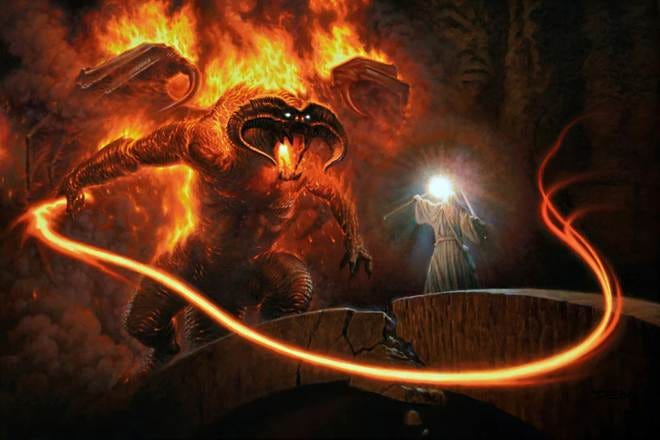
Tempted as I was to try out the Evil Campaign, I opted for the Good. Which means that quite early on in the game I get to face the Balrog……..

Wow, Halfling! First thing in the morning, this came in and I had to devour it, and make notes, even before meditating. Not before coffee, though.
Jesus said, allegedly, "Evil must come, but woe to him by whom it comes".
The many sayings of Jesus, in my opinion, come from quotations of old saws, well-known to his audience.
Anyone wishing to explore the historicity of Jesus, can't do better than to work through the books (his website is threadbare) of Robert Eisenman.
Tolkein seems to be, like many Catholics, doomed to try and reconcile incompatible dogmas, pounded into him at the earliest age, with the hammers of heaven and hell.
For me, the reality of powerful (creative?) agents, between us in our solid bodies, (solid matter is extremely rare in this gaseous universe that we presume to know), and the ultimate "point source" of all, is undeniable; fact, not fantasy.
Tolkein does good service to explore this, and bring our attention to it.
Let's clink coffee cups to Tolkien.
Now, to meditate, and to examine the instruments we take too much for granted, the human mind and heart.
In this time of war in the Middle East, Halfling's analysis of Tolkien's allegorical depictions of the elements of good and evil is even more valuable than it would have been at other times. It suggests that evil resides in the implemented desire to exercise domination and control over others' wills. Religion does not need to be either a purported justification or means of exercising domination and control, but it may be either or both. Theocratic Iran has clerics who dominate and control the people of Iran itself and seek to create death and destruction for those whom they are unable to dominate and control directly. It is not the only epitome of statist evil in today's world, but it is the most overtly brutal.