
I Cannot Live Without Books - The Library
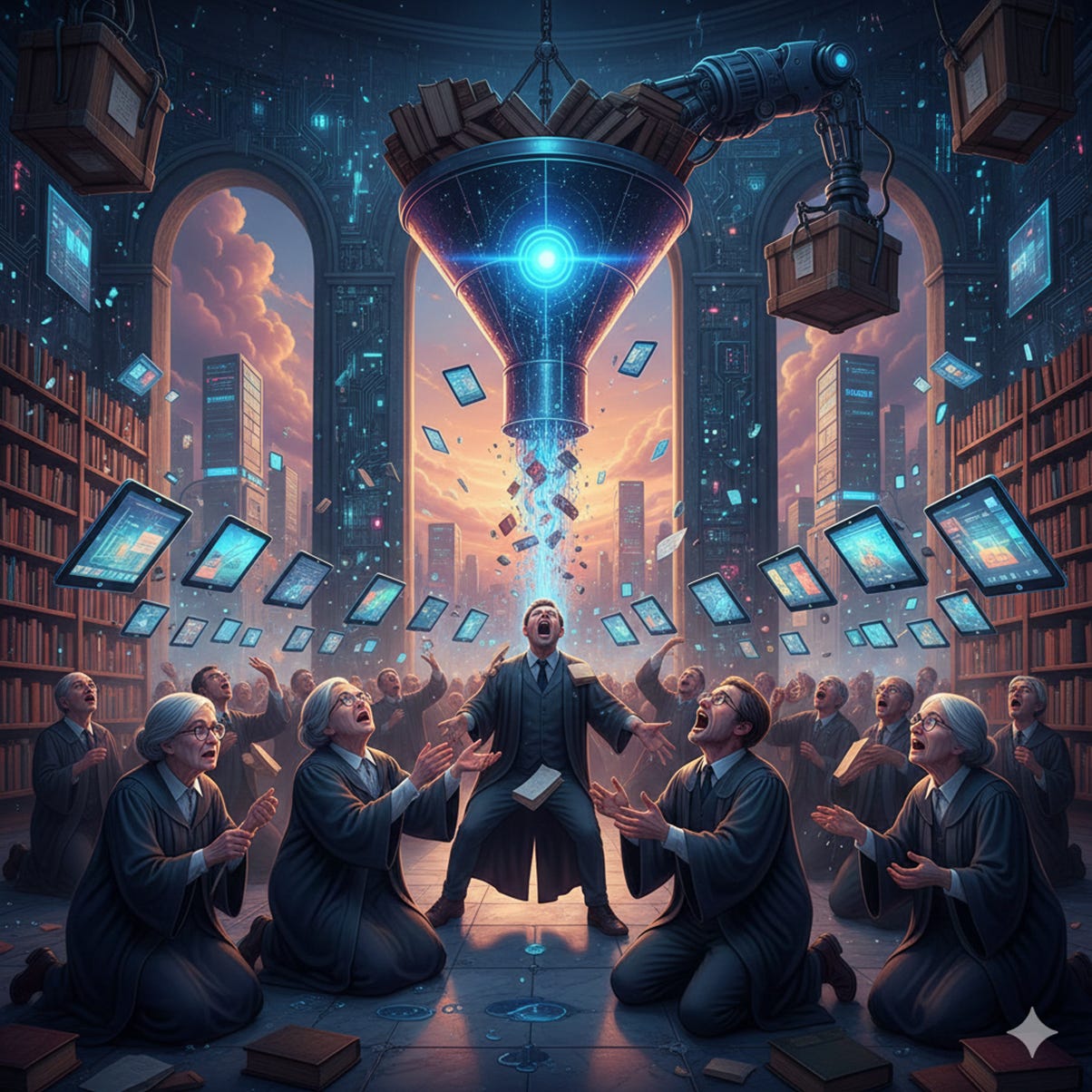
Hollowing Out Knowledge

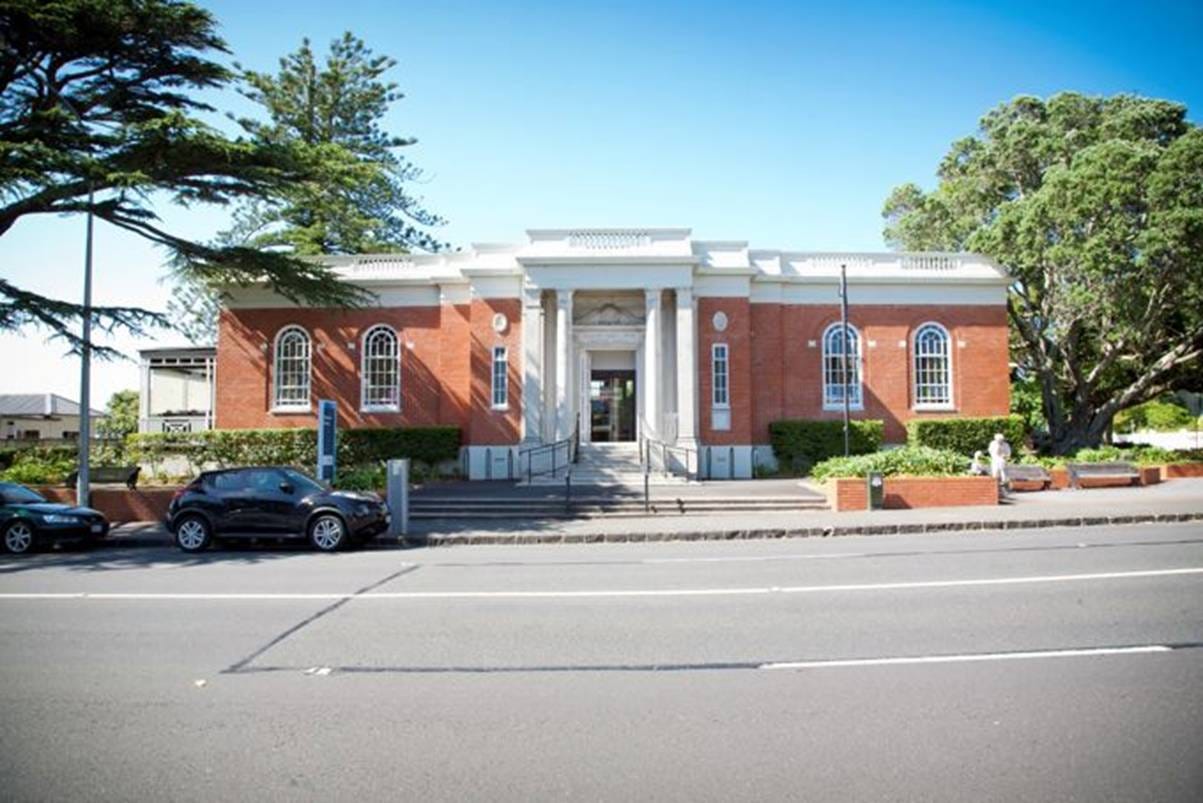
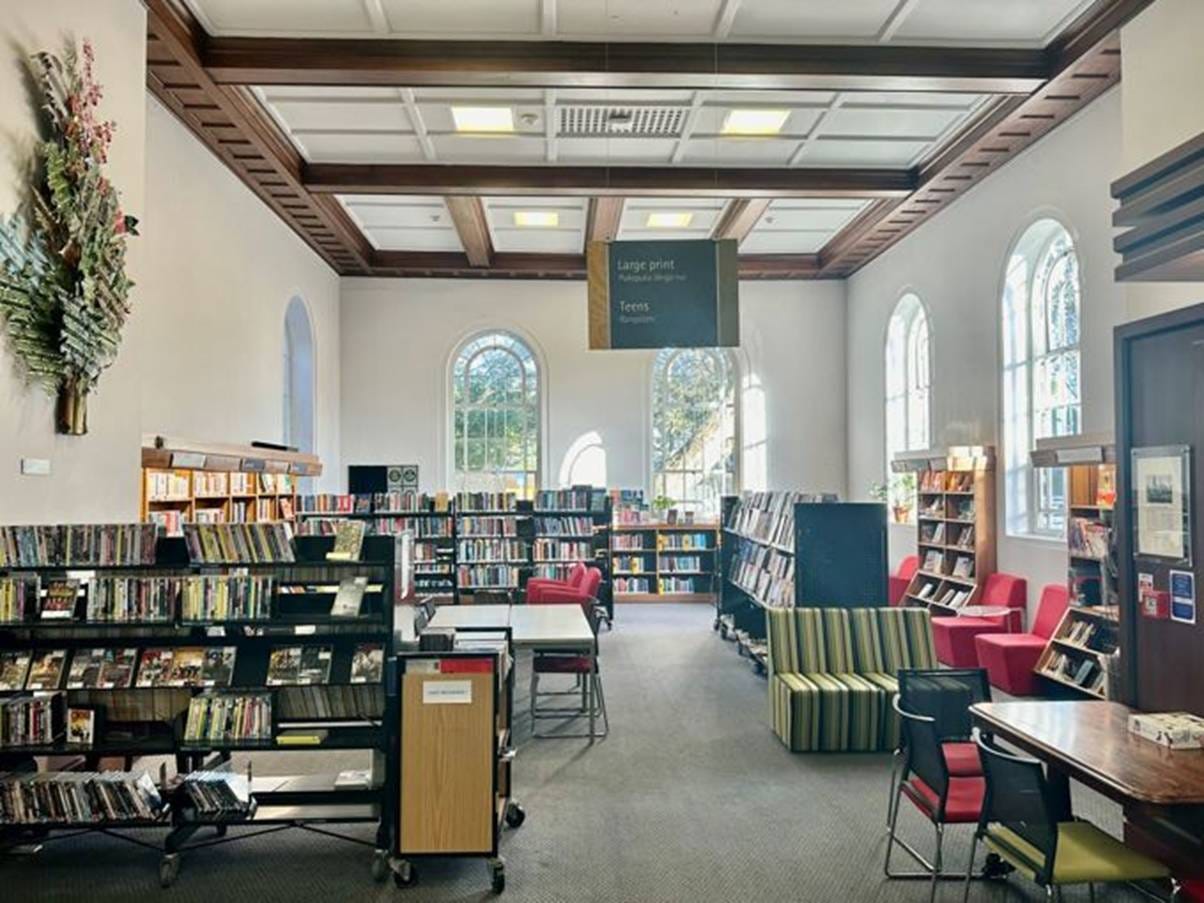
All of my life I have been involved in libraries. We had a library at home when I was young and on the bicycle ride to and from school I went past the Remuera Library on Remuera Road and often stopped - through the doors and hard right to the children’s section – for a browse and often a borrow.
There was a library at school and when I went on to the College – surprise surprise – I volunteered as a librarian.
When I was in the US on my AFS year I haunted the local library at Redwood Falls – one of the Carnegie Libraries. It was in this establishment that I began to develop and learn research skills.
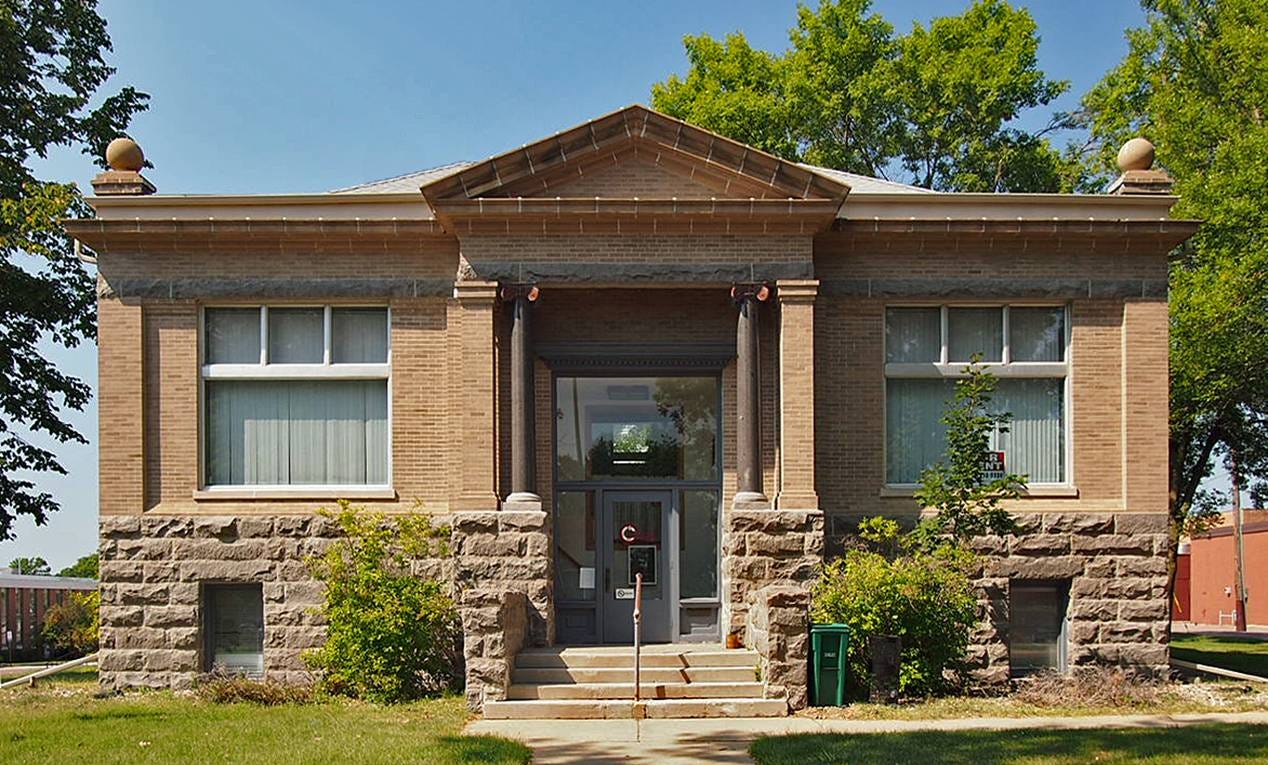
A Carnegie library is a library built with money donated by Scottish-American businessman and philanthropist Andrew Carnegie. A total of 2,509 Carnegie libraries were built between 1883 and 1929, including some belonging to public and university library systems. 1,689 were built in the United States, 660 in the United Kingdom and Ireland, 125 in Canada, and 25 others in Australia, South Africa, New Zealand, Serbia, Belgium, France, the Caribbean, Mauritius, Malaysia, and Fiji.
Back in New Zealand there was a library in the Auckland CBD which was located in some of the buildings that now comprise the Auckland Art Gallery, and a new library building with – mirabile dictu – escalators between the floors became the Central Library.
By this time I was at University and the Arts library was located in a wing of the clock tower building and across the road in a sort of pre-fab structure was the Law Library. When the grand 6 storey library building was finished in about 1968 the Law Library and the main library moved in. Most of my time was spent in the Law Library and it wasn’t until I embarked upon my doctorate that I ventured back into the main library and that was a joy.
I have my own library at home. I had taken many years to get the style right and indeed to have a room set aside as a library. As things stand it is not perfect. The library doubles as an office and work space thus losing some of the relaxed ambience that is so important in a reading and relaxing space.
But the public libraries are what are important for a number of reasons.
Libraries have long served as one of society’s great equalizers. They are among the few remaining public spaces where a person’s worth is measured not by their purchasing power but by their curiosity. A student without internet at home, an elderly resident seeking large-print novels, a job seeker preparing for interviews, a researcher tracking down primary sources—all find what they need without a credit card or subscription fee.
Yet across the New Zealand, libraries face mounting pressure to reduce their physical collections. Budget constraints, spatial limitations, and the seductive promise of digital-only futures have led many institutions to dramatically winnow their holdings. Some view this as inevitable modernization. Others see it as a crisis hiding in plain sight.
The National Library embarked upon a plan to remove and dispose of approximately 600,000 items from its Overseas Published Collections (OPC). Rather like culling the exotic trees from a native forest, leaving only the indigenous species, the National Library has removed non-New Zealand publications.
The main objectives were to create space for growing New Zealand and Pacific collections, align the collection with the Library’s legislated mandate, and reduce storage costs (estimated at around $1 million annually).
The items selected for removal were generally those with low usage, with most not having been issued for 20 to 30 years, and less than 1% requested between 2017 and 2020.
Initially, the library attempted to “rehome” the books with other libraries, community groups, and the Internet Archive for digitization.
Due to limited success with rehoming and challenges regarding the Internet Archive agreement, the final decision for the remaining items was secure destruction (shredding and recycling).
The destruction of books! Heresy!
The proposal proved controversial, drawing criticism from authors, researchers, book dealers (such as Warwick Jordan of Hard To Find Books), and advocacy groups like Book Guardians Aotearoa, who argued that some valuable and potentially unique research materials could be lost.
The process faced several pauses and reviews, including a halt in 1999 and further re-evaluation in the 2020s. Ultimately, a general collections removal policy was agreed upon in June and the disposal of the remaining items via secure destruction began.
But this wasn’t all. A similar program was proposed for the Wellington Public Library.
Wellington City Council confirmed 80,000 books have been given away, sold or destroyed from the Te Matapihi Central Library collection, marking a nearly 18% drop in the number available since the library closed almost seven years ago.
An author whose own books are being removed said the change represented a wider attack on the humanities and New Zealand’s history, and is part of a move to turn libraries into places of entertainment rather than the vital cultural institutions they once were.
Some councillors expressed a view that a library was a place for books, not for entertainment or as a community hub – clearly a view that is heretical these days.
Wellingtonians would be unfortunately mistaken to think their new library would be “a readers’ nirvana”, councillor Nicola Young said, “instead, it will largely be an entertainment centre, a very expensive one.”
A council spokesman confirmed the indicative collection size is about 370,000 books, made up of about 250,000 on public display and another 120,000 available by request.
That is 80,000 fewer books than when the library was last open, when it held 450,000 books, made up of 410,000 on display and 40,000 available by request.
When asked what would happen to the 80,000 books to be removed from the public collection, the spokesman said many would go to public book sales.
“It’s our last resort to send books to be disposed of – this would be because they are in very poor condition, have obsolete factual information, or they are unwanted by either public sale or community offers,“ he said.
New Zealand author Glyn Harper, who writes military history and children’s books, said reducing the collection made him “very uncomfortable”.
“We’re losing a really important part of our history when these books are reduced or destroyed.”
Some of Harper’s own books, stamped as being from the Wellington City Libraries collection, have been spotted in a local second-hand bookshop, something that he said was “really sad” but unfortunately, not a surprise.
“Libraries are really the collective memory of the community, and if you’re going to start throwing out books because what they’re saying [is] too old ... I think that’s, in some ways, a dangerous path to go down,” he said.
“Making books available to people is the central function of a library rather than running internet courses and other things.
They are very important cultural institutions and above all they are places of learning, and I think in many ways these new developments are more entertainment than learning.”
Harper said it was part of what he saw as an attack on the humanities, noting “people don’t see value in books anymore, which I think is a huge mistake.”
A council spokesman said its key priorities for retention were materials from Wellingtonians, New Zealand and the South Pacific, “with a special awareness of Mātauranga Māori and Māori authors. We have paid careful attention to long-standing authors and content that remains important today and for the future”.
“We have also been guided by ongoing customer usage trends, including what library users have requested to borrow physically from our current storage site since the Central Library closed.”
The arguments for reduction sound reasonable enough. Digital resources save space. E-books never wear out. Databases can be accessed from anywhere. Why maintain dusty stacks when information lives in the cloud?
But this logic overlooks crucial realities about how knowledge actually works in communities. Physical collections serve purposes that transcend mere information delivery. They create serendipity—the undergraduate who stumbles upon an unexpected field while browsing shelves, the amateur historian who discovers local archives, the child who finds the book that wasn’t on any recommended list but becomes a lifelong passion.
Browsing cannot be replicated algorithmically. Recommendation engines show us more of what we already know we want. Library stacks show us what we didn’t know existed.
The social dimensions run deeper still. Libraries function as community memory. Local newspaper archives, regional history collections, and specialized holdings document the lived experience of ordinary people in ways that commercial databases, focused on profitable content, never will.
When libraries discard materials to save space or reduce costs, they often jettison the very items that make them irreplaceable: local publications, self-published works, materials in minority languages, niche academic journals, and older editions that show how understanding has evolved.
Researchers increasingly report encountering “ghost footnotes”—citations to materials that once existed in library collections but have been weeded out and never digitized. These gaps in the scholarly record cannot be filled by interlibrary loan if no library has retained the material.
The digital divide adds another layer of concern. While technology boosters envision universal internet access, the reality remains far more complex. Reliable home internet is still a luxury for many families. Digital literacy varies widely. E-readers require devices that not everyone owns. Subscription databases that libraries license often come with restrictions, limited simultaneous users, and the constant threat of price increases that make access unsustainable.
When libraries shift toward digital-only collections, they risk abandoning the very populations who depend on them most. Physical books require no passwords, no software updates, no compatible devices. They simply exist, available to anyone who walks through the door.
There are practical concerns as well. Digital access is rented, not owned. When a library purchases a physical book, it owns that book in perpetuity. When it licenses an e-book, it typically pays more for a license that expires after a set number of loans or a time period. Publishers can change terms, raise prices, or withdraw titles entirely. A library’s digital collection exists only as long as contracts are maintained and companies remain in business.
The COVID-19 pandemic revealed both the promise and peril of this model. While digital resources allowed libraries to continue serving patrons during closures, many institutions also confronted the reality that they had sacrificed ownership for access—and when budgets tightened, that access could evaporate.
None of this argues against digital resources, which have expanded access in remarkable ways. I used digital resources in my PhD study, relying on a collection of digital renderings of early printed books – Early English Books Online. The collection was gleaned from a number of sources. The British Library has digitised many of its valuable books in its collection, making them available for research or interest.
But digitisation suggests the need for balance rather than wholesale replacement. A robust library maintains both strong physical collections and thoughtful digital offerings, recognizing that different materials serve different purposes and different populations.
The most vulnerable tend to lose out when institutions prioritize efficiency over equity. Libraries, at their best, operate on a different logic than do markets. They preserve materials not because they’re popular or profitable but because they might matter to someone, someday. They maintain comprehensive collections because knowledge is unpredictable and society benefits when information remains accessible across generations.
As library systems across the country face decisions about their collections, the stakes extend beyond individual institutions. Libraries form a distributed national infrastructure for knowledge preservation and democratic access to information. When one library discards materials assuming another will keep them, but every library makes the same assumption, materials disappear entirely.
The question facing communities is not whether libraries should embrace new technologies but whether they can maintain their historic mission in an era of constant pressure to do more with less. That mission—ensuring free, equitable access to the full range of human knowledge—has never been more important than in our fragmented information landscape.
Shrinking collections might create tidier spaces and smaller budgets. But they also create smaller futures, where access to knowledge depends increasingly on individual wealth rather than collective investment, and where the serendipity that sparks innovation gives way to the narrow efficiency of search algorithms.
In the end, libraries matter not despite being inefficient by market standards but because of it. They keep materials that aren’t bestsellers. They serve patrons who aren’t profitable. They preserve information that might not be accessed for years but proves essential when finally needed. That’s not waste. That’s civilization.

Never discard history.