
Something Must Be Done
What Would You Be Prepared to Give Up

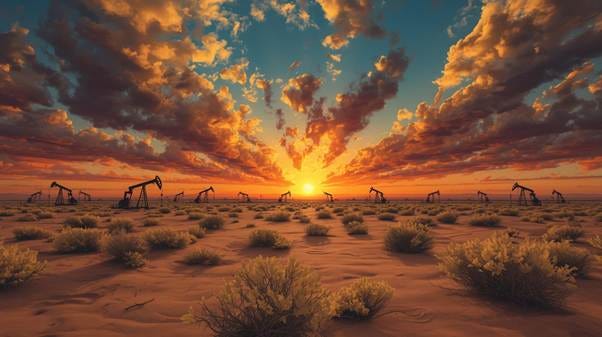
A Landman or a petroleum landman is an individual who performs various services for oil and gas exploration companies. These services include negotiating for the acquisition or divestiture of mineral rights; negotiating business agreements that provide for the exploration and/or development of minerals; determining ownership in minerals through the research of public and private records; reviewing the status of title, curing title defects and otherwise reducing title risk associated with ownership in minerals; managing rights and/or obligations derived from ownership of interests in minerals; and unitizing or pooling of interests in minerals.
It is hard to imagine a TV drama featuring such a person but Christian Wallace Taylor Sheridan’s “Landman” is one such – an excellent programme which I recommend. It is on Prime and Season 2 began on 17 November.
The Landman of the title is Tommy Norris who works for the fictional M-Tex Oil in West Texas where “roughnecks and wildcat billionaires are fuelling a boom so big it’s reshaping our climate, our economy, and our geopolitics”.
In one scene Tommy is talking to the lawyer Rebecca. They are at a site where there are a number of wind turbines and the following is the dialogue. (Warning – some of the language is “colourful”)
Rebecca – God they’re massive
Tommy – 400 feet tall. The concrete foundation covers a third of an acre and goes down in the ground 12 feet
Rebecca – Who owns them?
Tommy – Oil companies. We use them to power the wells. No electricity out here. We’re off the grid.
Rebecca: They use clean energy to power the oil wells?
Tommy: They use alternative energy. There’s nothing clean about this.
Rebecca – Please Mr Oilman – tell me how the wind is bad for the environment
Tommy: Do you have any idea how much diesel they had to burn to mix that much concrete?
Or make that steel and haul this sh¡t out here and put it together with a 450-foot crane?
You want to guess how much oil it takes to lubricate that fսck¡ng thing? Or winterize it?
In its 20-year lifespan, it won’t offset the carbon footprint of making it.
And don’t get me started on solar panels and the lithium in your Tesla battery.
And never mind the fact that, if the whole world decided to go electric tomorrow, we don’t have the transmission lines to get the electricity to the cities. It’d take 30 years if we started tomorrow.
And, unfortunately, for your grandkids, we have a 120-year, petroleum-based infrastructure. Our whole lives depend on it. And, hell, it’s in everything.
That road we came in on. The wheels on every car ever made, including yours. It’s in tennis rackets and lipstick and refrigerators and antihistamines. Pretty much anything plastic. Your cell phone case, artificial heart valves. Any kind of clothing that’s not made with animal or plant fibers. Soap, fսck¡ng hand lotion, garbage bags, fishing boats. You name it. Every fսck¡ng thing.
And you know what the kicker is? We’re gonna run out of it before we find its replacement.
Rebecca: It’s the thing that’s gonna kill us all... as a species.
Tommy: No, the thing that’s gonna kill us all is running out before we find an alternative.
And believe me, if Exxon thought them fսck¡ng things right there were the future, they’d be putting them all over the goddamn place.
Getting oil out of the ground’s the most dangerous job in the world. We don’t do it ‘cause we like it. We do it ‘cause we run out of options. And you’re out here trying to find something to blame for the danger besides your boss.
There ain’t nobody to blame but the demand that we keep pumping it.
A video clip of the exchange is here.
And then this came across my screen.
A disturbing article was published recently in the New Zealand Medical Journal. It focussed upon the fact that imported ingredients are needed to locally manufacture commonly used medicines.
The article points out that none of the most widely prescribed 10 medicines for acute conditions, including pain relievers and medicines for treating infections, are able to be made in New Zealand.
This is because of a lack of access to the key ingredients, many of which require petrochemical refining which is no longer present in New Zealand.
The medicines examined in the study are: the popular pain reliever paracetamol; omeprazole used for acute gastritis and treating gastric ulcers; the antibiotic amoxicillin, used to treat severe bacterial pneumonia; the anti-inflammatory ibuprofen, used for acute pain relief; aspirin, used to manage strokes and heart attacks; the blood pressure medication metoprolol; salbutamol, used for acute asthma attacks; prednisone, a steroid used for severe allergic reactions; the antihistamine cetirizine; and the calcium channel blocker amlodipine, used to manage angina.
The article points out that not only is modern pharmaceutical manufacturing highly dependent on ingredients from petrochemical refining, but New Zealand lacks many other necessary ingredients for the 10 medicines – and the complex industrial infrastructure to synthesise modern medicines at scale.
Did you see that – petrochemicals – the thing Tommy was talking about.
And the real issue is that New Zealanders could lose access to these life-saving medicines in the event of a global catastrophe or events such as a Northern Hemisphere nuclear war, a volcanic winter, a bioengineered pandemic, or a major solar storm, which could all contribute to a collapse in international trade and which in turn would lead to critical shortages of imported medicines.
Professor Nick Wilson from the Faculty of Medicine’s Department of Public Health at the University of Otago, Wellington commented that
“New Zealand could potentially build new infrastructure to produce some of the ingredients needed for medicines production by modifying the wood pyrolysis plant in Timaru to produce phenols and furans, or the Glenbrook steel plant to produce benzene/phenol from coke gas. A micro-refinery could also be built for oil extracted in Taranaki or from coal tar from West Coast coal mines.
But all of these options would be expensive and challenging to undertake in a crisis situation.”
New Zealand once had petrochemical refining – Marsden Point. But not only was that facility closed down. It was totally decommissioned. Concrete was poured into many of the pipes to ensure that they could never again be used or repurposed.
The Marsden Point oil refinery was decommissioned due to a combination of economic, structural, and global factors. Key reasons included the refinery’s inability to compete with larger, more cost-effective Asian refineries, high domestic energy costs, aging equipment, and the global transition towards lower-carbon fuels. Ultimately, the company and its shareholders decided it was not economically viable to continue operations, and the site was converted into an import terminal.
Recommissioning the Marsden Point refinery would cost between NZ$4.9 billion and NZ$7.3 billion, according to a government-commissioned study. Because the refinery was fully decommissioned in 2022 and converted to an oil product import terminal, any attempt to restart refining operations would be a new project requiring billions in capital investment.
When the refinery closed, Energy and Resources Minister Megan Woods – yes, Labour, no surprises here – suggested that there was not going to be a fuel security issue with the move to a full import model and so there is no case to be made to declare the refinery a nationally strategic asset.
She argued that independent expert advice confirmed that a 100% fuel import model is more resilient to many disruption scenarios than having a domestic refinery because it removes the ‘single point of failure risk’ associated with refining.
And the problem is, as the Medical Journal article highlights, we all rely on oil and oil products every day. And perhaps with the benefit of hindsight and the fact that we now inhabit a disrupted world in the context of trade, failing to declare Marsden Point a nationally strategic asset.
So in the event of a really disrupted trade scenario we could lose access to vital medicines or suffer shortages of them.
And although the focus is on oil and the absence of petrochemical refining, inevitably this brings into focus the whole climate issue and the suggestion that – as the COP Conference of doomsayers promotes – we must do something.
There are a few problems with that. In the absence of a totally authoritarian Government (of the Green persuasion) it will be difficult to compel people to change their lifestyles in the very significant ways that would be required to reduce emissions.
And that raises another issue. How much would the populace be prepared to sacrifice in terms of lifestyle and creature comforts. Would we all really want to return to a basic subsistence existence. Somehow I don’t think so.
It is arguably too late to truly reverse climate change, as some of its most damaging consequences and tipping points have already been crossed, making many changes permanent and irreversible on human timescales. Mother Earth moves in timescales reckoned in geologic time rather than the three score years and ten we use to reckon time
Research shows that crucial climate “tipping points” have already been passed. The Greenland and West Antarctic ice sheets are now committed to long-term melting, even if all emissions ceased today, locking in centuries of sea level rise.
Disappearing permafrost is releasing methane at unprecedented rates—a greenhouse gas far more potent than CO₂—which will continue for decades.
Regions such as the Amazon rainforest, once a ‘carbon sink,’ now emit more CO₂ than they absorb in dry years and risk ecosystem collapse. Once these changes begin, it’s impossible to revert the system to its prior state; the planet’s feedback loops ensure that the effects are compounding and largely irreversible.
The vast majority of scientific studies find that even if human emissions were to stop completely, temperatures and impacts would persist for centuries due to the longevity of atmospheric CO₂ and ocean heat retention.
Atmospheric carbon takes hundreds to thousands of years to dissipate, and models consistently forecast that many consequences, such as sea level rise and the melting of ice sheets, will endure.
Efforts like carbon dioxide removal may eventually lower temperatures, but ecosystem and climate disruptions (coral bleaching, droughts, habitat loss) already underway cannot be “undone” by these measures.
The world’s ongoing reliance on fossil fuels (oil) and the slow pace of transition to renewable energy means that meaningful reversal is out of reach; at best, mitigation can slow or limit additional damage.
While some progress is being made in renewables deployment, wealthy nations have consistently failed to deliver promised climate aid, and economic growth continues to drive energy demand and emissions upward.
As Tommy said in the segment from “Landman”
“the thing that’s gonna kill us all is running out before we find an alternative.”
Finding the alternative is the issue. That is the “something” that must be done.

"to declare the refinery a nationally strategic asset".......
Self-sufficiency was in our DNA until the propaganda program in the 60s that hammered the fallacy that we absolutely needed to export, to get "overseas funds", so that we could continue to waste said funds on English cars and tractors, with their execrable Lucas electrics.
How much of a nationally strategic asset is the copper phone system? I would think that trashing that system is treasonously cavalier.
Anthropogenic climate change is not so much a fallacy, as a minnow magnified for sociopolitical purposes. When seen in the context of volcanic activity, and, even much more, the engine of solar activity, it becomes irrelevant.
Anyone who has spent twenty minutes looking at historical temperature graphs, (500,000 years is a good place to start) soon sees the climate change guilt trip as Quixotic. There's a small difference. Don Quixote, unlike that indefinite article Al Gore, was well-intentioned.
Global Boiling has been a highly successful scam pouring billions into the pockets of many. Had all that money been invested into real green ideas (like reducing pollution, or cutting plastic waste) we’d all be far better off. The planet is warming, slightly, it’s called nature. Ian Plimer is good on this stuff. What NZ needs is for Luxflakes to stop with all the climate pandering & pointless carbon credit schemes and use all that money to fix our country.